
Paying off a part of your home loan before the scheduled repayment period can feel like a significant financial achievement. It reduces your outstanding principal and may help you save on interest over time. But if you have already made a partial prepayment, you might wonder whether switching to another lender for a lower interest rate is still worth the effort.
The answer depends on how much you owe, how many years remain on your loan, and the savings your new lender can offer. A home loan balance transfer can still make financial sense after partial prepayment, but it is important to look beyond the advertised interest rate.
How Does Partial Prepayment Affect Your Home Loan?
A partial prepayment involves paying an additional amount towards your outstanding loan principal, over and above your regular EMIs. Since interest is generally calculated on the outstanding balance, reducing the principal can lower your future interest burden.
For instance, if you receive a bonus or have surplus savings, you might use a portion of that money to reduce your home loan balance. Depending on your lender’s terms, you may choose to reduce your EMI or shorten the remaining loan tenure.
This decision can influence whether a balance transfer is worthwhile. With a smaller outstanding balance, the potential savings from a lower interest rate may also decrease. However, if you still have many years left to repay the loan, even a modest reduction in the interest rate could lead to meaningful savings.
When Is a Home Loan Balance Transfer Worth Considering?
A home loan balance transfer involves moving your outstanding loan from your existing lender to another lender offering more favourable terms. After making a partial prepayment, consider switching if the following conditions apply.
- Your current interest rate is significantly higher
If market interest rates have fallen or another lender offers you a substantially lower rate, transferring the remaining balance may help reduce your interest expenses. The actual benefit depends on your outstanding principal, repayment period and the new loan terms.
- You still have a long repayment period
Interest savings are generally more significant when a loan has a considerable tenure remaining. If you have already repaid most of your home loan, the savings from switching may not be enough to justify the associated costs.
- Your credit profile has improved
Your income, repayment history, and credit score may have improved since you first applied for your loan. This could help you negotiate better terms with another lender. It is worth comparing offers rather than assuming your existing lender will automatically provide the most competitive rate.
What Costs Should You Consider Before Switching?
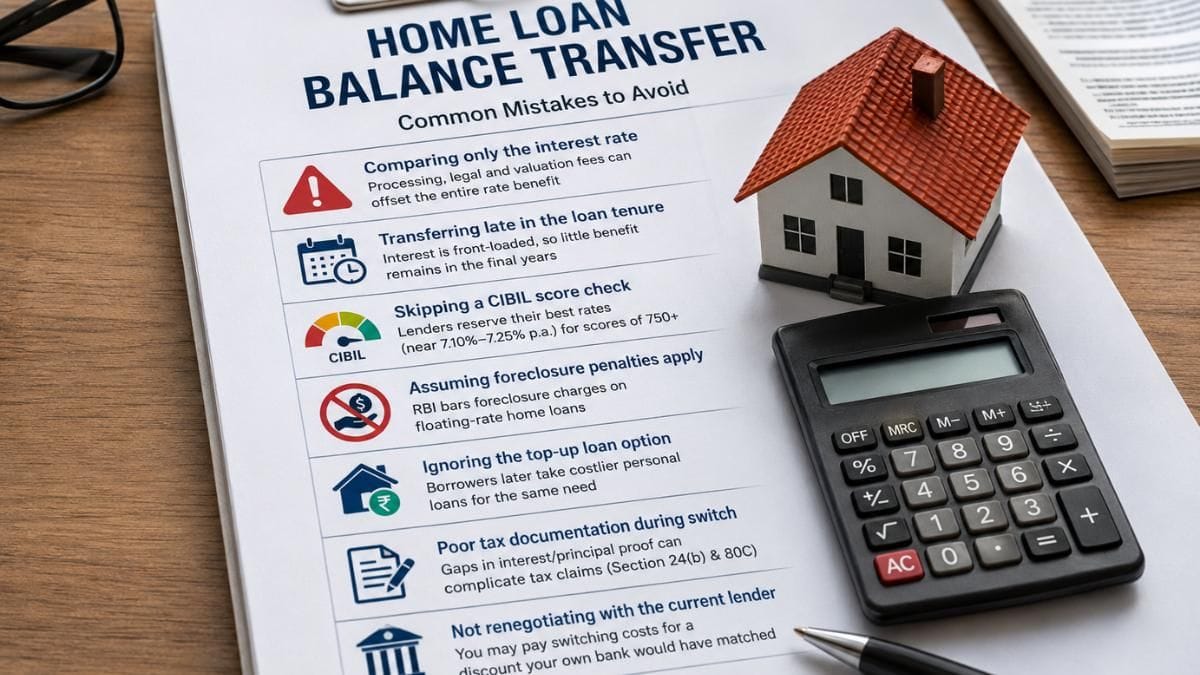
A lower interest rate does not always translate into lower overall costs. Before proceeding with a home loan balance transfer, check for applicable processing fees, administrative charges, legal expenses, and property valuation costs.
You should also review the terms of your existing loan and confirm whether any charges apply to your proposed transfer. These costs can vary depending on the lender, loan type and applicable regulations.
For example, suppose switching lenders saves you ₹1.5 lakh in interest over the remaining tenure but involves ₹30,000 in total transfer-related expenses. Your estimated net savings would be ₹1.2 lakh, assuming the figures cover all relevant costs and the loan terms remain comparable.
This is why calculating the net benefit matters more than focusing on the difference between two interest rates.
Should You Prepay More or Transfer the Loan?
If you have additional funds available, you may be deciding between making another partial prepayment and transferring your existing loan. Both options can reduce your overall interest burden, but they work differently.
Partial prepayment reduces your outstanding principal without requiring you to change lenders. A balance transfer, on the other hand, may lower the interest rate on the remaining balance but involves a new application and associated formalities.
The right choice depends on your financial priorities. If you want to become debt-free sooner and have sufficient savings, prepayment may be attractive. If your current interest rate is relatively high and a new lender offers substantial long-term savings, transferring the loan could be worth exploring.
Avoid using all your available savings for prepayment if doing so leaves you without an emergency fund. Maintaining financial flexibility is just as important as reducing debt.
Make the Decision Based on Actual Savings
A partial prepayment does not automatically make a home loan balance transfer unnecessary. It simply changes the calculation. Compare the outstanding principal, remaining tenure, current interest rate, proposed rate, and all applicable transfer costs before making a decision.
You can also approach your existing lender to negotiate a rate revision before moving your loan elsewhere. Sometimes, a revised rate can help you save money without the paperwork involved in transferring the balance.
Ultimately, switching lenders after partial prepayment is worthwhile when the expected net savings justify the costs and effort. A careful comparison of your available options will help you choose a repayment strategy that supports your long-term financial goals.
